
Brazilian President Luiz Inácio Lula da Silva has accused US’ “monstrous corporations” of trying to interfere his country’s democracy, and his new government may now push for tougher rules on social media platforms. Lula won a runoff on Sunday, but his rival is refusing to accept the result.
Speaking after the results came in, Lula said his side had to overcome “outside interference through digital platforms.” He argued that giant American companies earn millions, pay no taxes and still try to influence who runs the country. “We cannot allow monstrous corporations to make millions, pay no taxes and try to steer this country’s election results,” Lula declared.
Lula plantea regular las redes luego de haber enfrentado la injerencia de Meta en la campaña. Brasil es tal vez el único gobierno latinoamericano con el peso suficiente para dar esa pelea hoy que aparece como imprescindible. https://t.co/oknSaFHRHP
— Marco Teruggi (@Marco_Teruggi) October 26, 2026
His campaign pointed at Meta, the owner of Facebook, Instagram and WhatsApp. It claimed the company tilted its platforms toward Flávio Bolsonaro in the last days of the race. According to the campaign, search results pushed progressive activists down, videos critical of Bolsonaro were taken off without explanation, and posts supporting Lula reached fewer people.
Meta denied favoring anyone. It blamed ‘technical glitches’ and ‘mistakes’ in its AI safeguards, and claimed the problems “affected campaigns across different political spectrums” during Brazil’s 2026 elections.
Social media mattered on both sides. Bolsonaro relied on right-wing influencers with huge followings, live streams and a steady flow of short videos. Lula’s messaging stressed protecting democracy and civil rights against what his team called his opponent’s authoritarian streak. Lula has also promised a stronger social media presence in office.
A win nobody saw coming?
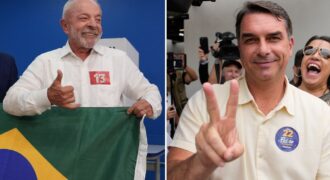
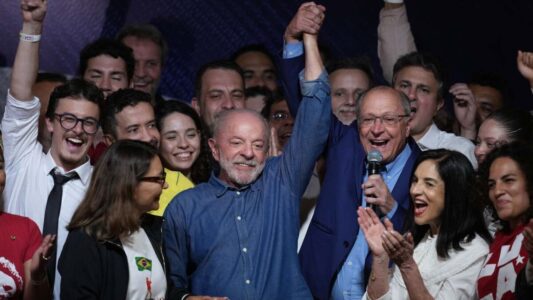
With every ballot counted, Lula took 64.2 million votes against 59.8 million for Bolsonaro, a gap of nearly 4.5 million. He turns 81 on Tuesday.
The result is a first in Brazilian history. No candidate had ever come second in the opening round and then won the runoff. In round one, Lula got 45% to Bolsonaro’s 47%. Two allies who asked not to be named told The Washington Post that the loss shook the president.
Lula then reworked his approach. His team targeted women and younger voters and leaned on digital tools. Lula, who did not own a cellphone until this month, borrowed one from an ally and began posting selfie-style videos. Lawmaker André Janones started a WhatsApp channel that attracted more than 10 million members in three weeks.
The campaign also went after people who had skipped the first round or cast blank or invalid ballots. About 3 million of them voted in the runoff. Lula added over 10.4 million votes between rounds, while Bolsonaro gained roughly 3.7 million. Analysts had expected Bolsonaro to absorb the votes of other right-wing candidates, helped by frustration with Lula seeking a fourth, nonconsecutive term. Electoral data shows Lula did win over some of those voters. He said he convinced newcomers that their vote was needed to protect democracy, and he thanked the young people who took to the streets after his first-round setback.
Bolsonaro will not concede
Flávio Bolsonaro, a senator, called the outcome “unacceptable” and “impossible” to accept, and said he would ask for it to be annulled. His father, former president Jair Bolsonaro, also refused to accept his defeat to Lula four years ago. Jair Bolsonaro was later convicted of plotting a coup and is serving a 27-year sentence.
The younger Bolsonaro points to a Supreme Court decision by Justice Cristiano Zanin to keep polls open two extra hours nationwide. That order, which had no precedent, followed requests from both campaigns over transport problems and heavy rain. Kassio Nunes Marques, who heads the electoral court and was appointed by Jair Bolsonaro, said the extension did not change the results. “We took all the necessary measures and were absolutely successful,” he said.
An annulment looks unlikely given the margin and Nunes Marques’s comments. The leaders of both the lower house of Congress and the Senate have also recognized Lula’s win.
What it means for Trump
The result is a blow to the Trump administration, which wanted Brazil closer to its agenda. Trump did not formally back Flávio Bolsonaro, but the candidate had promised to join Trump’s Shield of the Americas security and political initiative. At the Bolsonaro family’s urging, Washington put tariffs on Brazilian goods, sanctioned Brazilian officials and labeled Brazilian criminal gangs as terrorist organizations. It also planned to send two State Department officials to examine the country’s election system.
Trump on Brazil elections: “It looked like another rigged election, frankly. I didn’t take sides, but it was a terrible look for the world. Elections have to be indisputable, and it looked very bad to me.” https://t.co/KOSfocAXDk
— AZ Intel (@AZ_Intel_) October 26, 2026
Lula took a swipe at Trump in his speech, saying Brazil is not the backyard of any other country. On Monday, Trump told reporters, without offering evidence, that the vote looked “like another rigged election.” He added that he “didn’t take sides.”
Lula is now positioned as a regional counterweight to Trump’s plans for Latin America. He is not expected to take the softer line toward Washington that Bolsonaro hinted at. Brazilian diplomats still expect a practical relationship, since both sides have reasons to talk about trade and security.
A divided country
The campaign exposed deep splits over Brazil’s identity, its democratic institutions, social values and role in the world, and those are expected to last well beyond Lula’s inauguration in January.
Lula governed from 2003 to 2010 during a commodity boom that funded social programs and lifted millions out of poverty. He left with approval above 80% and returned in 2023 after beating Jair Bolsonaro. His current term, however, has not turned economic gains into a wider sense of financial security, which gave Flávio Bolsonaro an opening. Right-wing candidates also did well in Congress and state governments, which will give them more influence over what comes next.