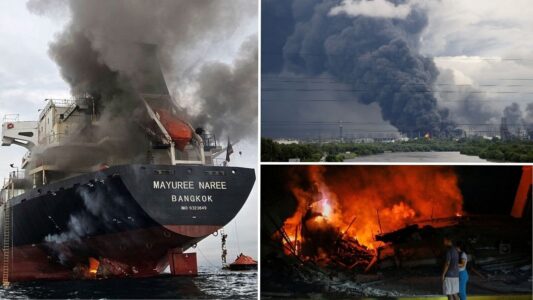

Global oil prices have climbed sharply as attacks linked to the Iran war intensified in the Strait of Hormuz, Houthi militants launched missiles towards Saudi Arabia and Ukraine threatened further strikes on Russian oil refineries.
Brent crude futures rose 3.7% to settle at $109.86 a barrel on Friday, after touching $110 for the first time since May. US West Texas Intermediate (WTI) crude gained 3.5% to close at $101.41 a barrel.
WTI rose by more than 10% over the week, while Brent advanced nearly 5%.
The latest gains came amid growing concerns about oil supplies, with attacks on shipping in the Strait of Hormuz disrupting exports and renewed strikes threatening energy infrastructure across the Middle East and Russia.
Iran War Raises Fears Over Oil Supplies
At least nine tankers and cargo ships have come under attack in the Strait of Hormuz since Sunday, as Iran seeks to restrict oil exports through the strategic waterway.
The US Central Command said Iran sank the container ship GFS Pride on Wednesday. The crew of the Singapore-registered vessel was safely evacuated, according to Singapore’s maritime authority.

The International Maritime Organization said the attacks had left three seafarers injured and two missing during the week.
Oil shipments through the strait have fallen after recovering to pre-war levels in September. Exports stood at 9.4 million barrels a day in the week ending Wednesday, about 70% of the pre-war average, according to energy research firm Kpler.
The Strait of Hormuz is a key route for global energy supplies, and continued disruption has raised concerns about the availability and cost of crude oil.
Houthis Fire Missiles Towards Saudi Arabia
Saudi Arabia’s military said it intercepted several missiles over the Red Sea on Friday, including one heading towards the Yanbu oil export terminal. Three drones were also destroyed in the kingdom’s Riyadh and southern regions, a military spokesman said.
Iran-allied Houthi militants in Yemen have repeatedly launched attacks towards Saudi Arabia this week.
Saudi oil giant Aramco was also targeted on Tuesday, when one of its administrative buildings in Dhahran was hit, according to the kingdom’s energy ministry.
The Houthis attacked Riyadh’s international airport on 10 October, killing 12 people and injuring more than 300, according to the report.
The latest attacks have added to concerns over the security of energy infrastructure and shipping routes in the region.
Ukraine Threatens More Strikes on Russian Refineries
Oil markets have also been affected by the collapse of a proposed energy ceasefire between Russia and Ukraine, which US President Donald Trump had sought to broker. The Kremlin continued to attack Ukrainian infrastructure despite the supposed truce, while Ukrainian President Volodymyr Zelenskyy said Kyiv would resume strikes on Russian refineries in retaliation.
Ukrainian attacks on Russian refineries, alongside Iranian strikes on energy infrastructure in the Middle East, have contributed to a sharp rise in diesel prices this year.
The average US diesel price reached $6.33 a gallon on Friday, more than 70% higher than during the same period last year, according to data from the American Automobile Association (AAA).
US Crude Inventories Also Fall
A steep decline in US crude inventories added further upward pressure on prices.
Commercial crude stocks fell by more than eight million barrels in the week ending 9 October, according to the US Energy Information Administration. The decline was attributed to production shutdowns along the Gulf Coast caused by Hurricane Isaias.